Why sealing matters here
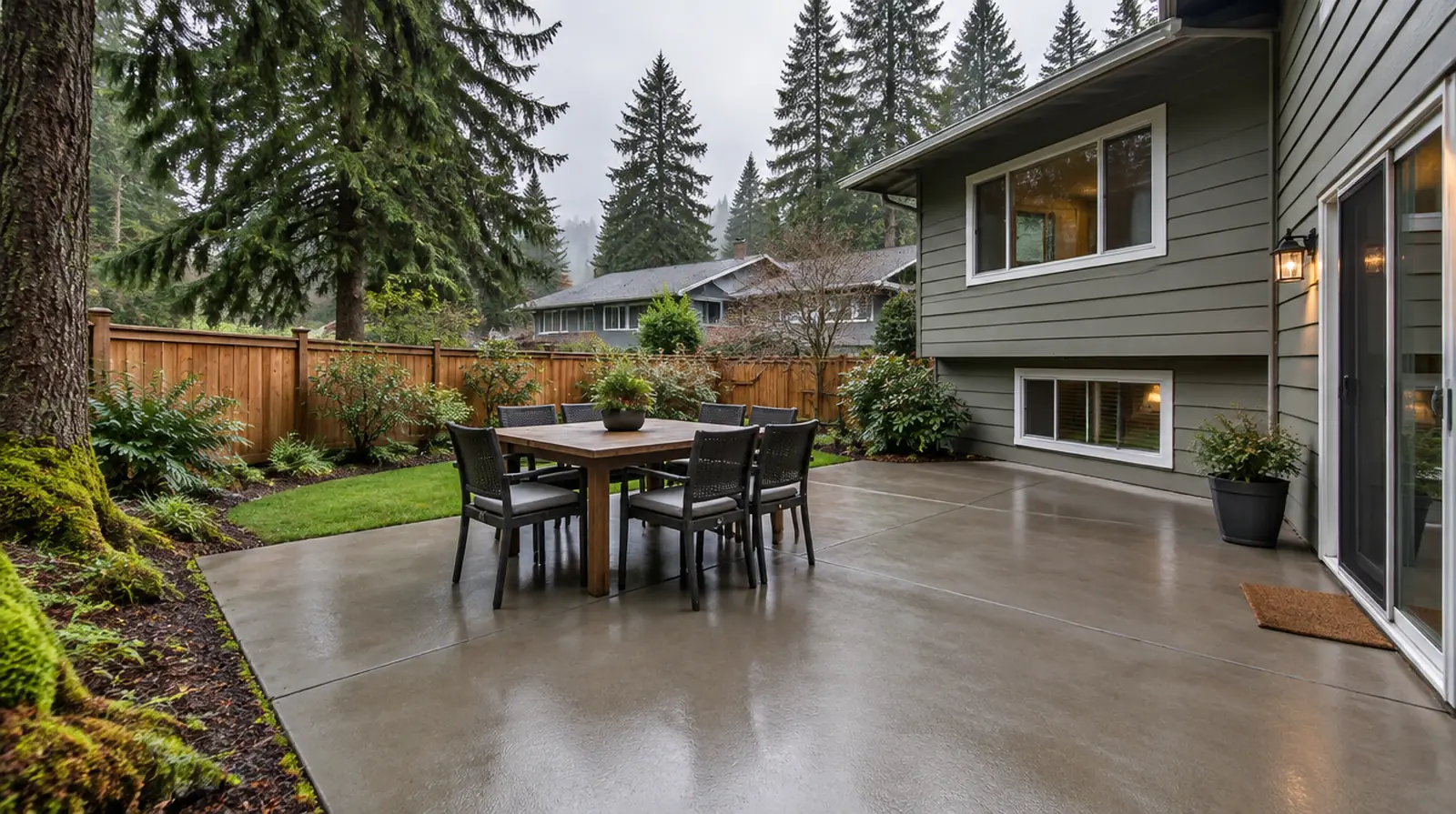
Concrete in a damp, shady climate stays wet for long stretches. That moisture feeds moss, algae and mildew, which turn patios green and slippery and stain walkways black. Water also carries dirt and organic stains deep into the concrete. A good sealer reduces how much water the surface absorbs, which makes it harder for growth to take hold and easier to clean.
What we seal
- Patios and outdoor living areas
- Front walks and steps
- Pool and hot tub surrounds
- Garage and shop floors as a lighter alternative to coatings
- Driveways
Types of sealer
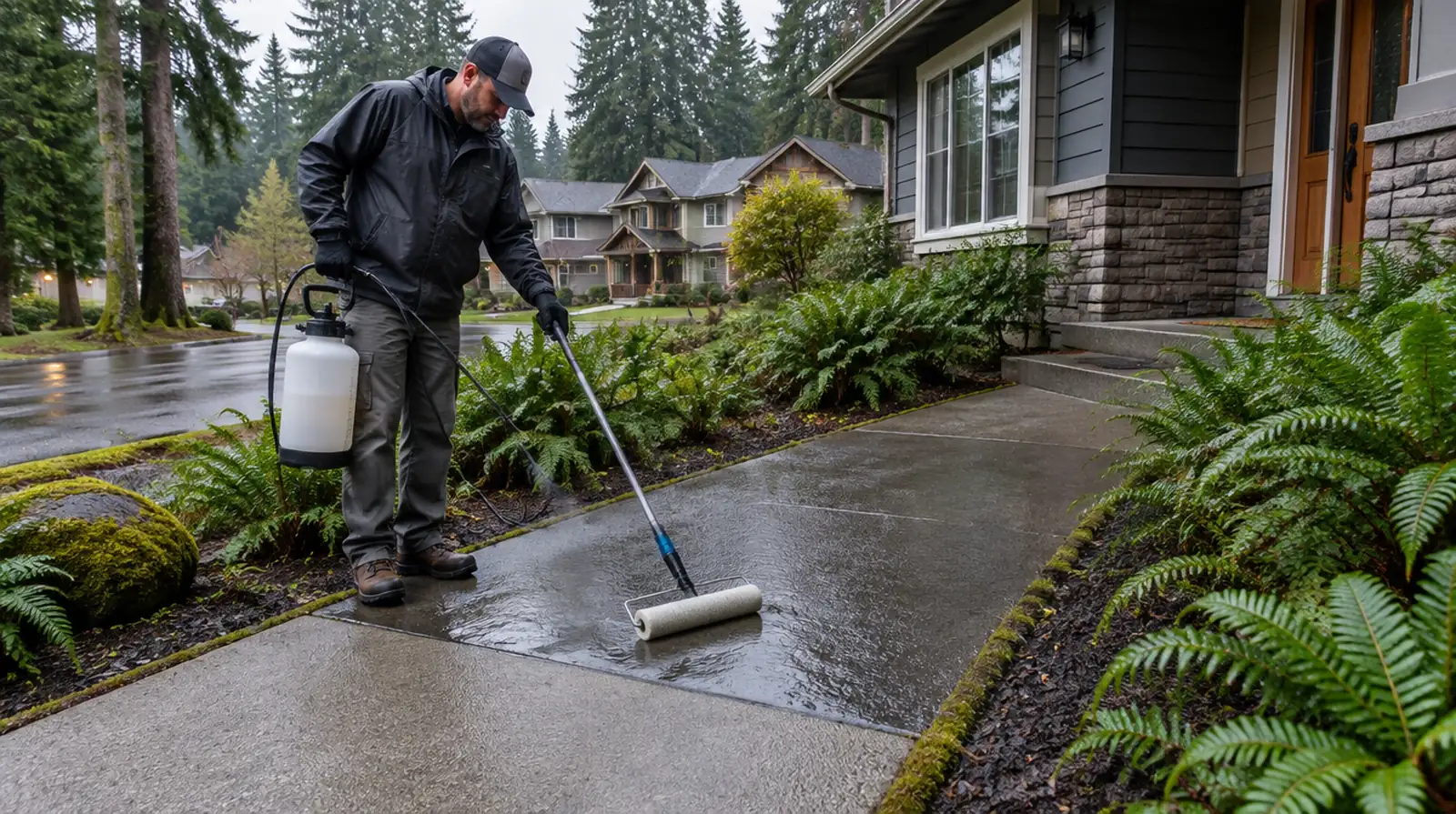
Penetrating sealers such as silanes and siloxanes soak into the concrete and repel water without changing the look much. They keep traction and are ideal for walks, steps and driveways.
Film-forming sealers such as acrylics sit on the surface, add a slight sheen and deepen color. They suit decorative patios but need more frequent reapplication and can be slicker when wet.
We recommend the right product for each area, often a penetrating sealer for anything that gets walked on in the rain.
Cleaning first
Sealing dirty or mossy concrete locks the problem in. We pressure wash, treat organic growth and allow the surface to dry properly before sealing. Drying time is a real factor in this climate, so we schedule sealing during drier stretches.
Our process
- Inspect and note cracks, stains and drainage.
- Pressure wash and treat moss and mildew.
- Repair cracks if needed.
- Let dry fully.
- Apply sealer evenly.
How often to reseal
Penetrating sealers often last several years. Film sealers may need refreshing every year or two in high-traffic or very wet areas. A simple water test, sprinkling water and watching whether it beads or soaks in, tells you when it is time.
Sealing vs. coating
Sealing protects concrete while keeping its natural look. A coating like epoxy or polyaspartic creates a new surface with color and texture. For a garage, a coating offers much more protection and easier cleaning. For outdoor patios and walks, sealing is usually the right choice.
Shade, roofs and runoff
Areas under big trees or next to roof edges stay wet the longest and grow the most moss. Before sealing, we point out downspouts that drain onto the concrete and gutters that overflow. Redirecting that water, trimming low branches and keeping debris swept off will help the sealer last and slow regrowth. Small changes like these make a noticeable difference.
Garage and basement sealing
Not every interior slab needs a full coating. For a storage garage, an unfinished basement or a utility room, a penetrating sealer or densifier can reduce dusting, slow staining and make sweeping easier at a lower cost. Densifiers react with the concrete to harden the surface, while sealers reduce absorption. These treatments do not change the look much and leave the floor breathable, which helps on slabs with moisture coming up from below. They are also a good first step if you plan to coat later, as long as we know so we can grind them off. We will be honest about the tradeoff: sealing is protection, not a new floor.
Will sealing stop moss completely?
It slows growth significantly. Shady areas may still need occasional cleaning.
Will it make my patio slippery?
Penetrating sealers do not change traction. Film sealers can include anti-slip additives.
When is the best time?
During a dry stretch, usually late spring through early fall.
Protect your concrete
Contact us for a sealing quote.
to get a concrete sealing quote.
Call (425) 696-7086 for a free estimate.