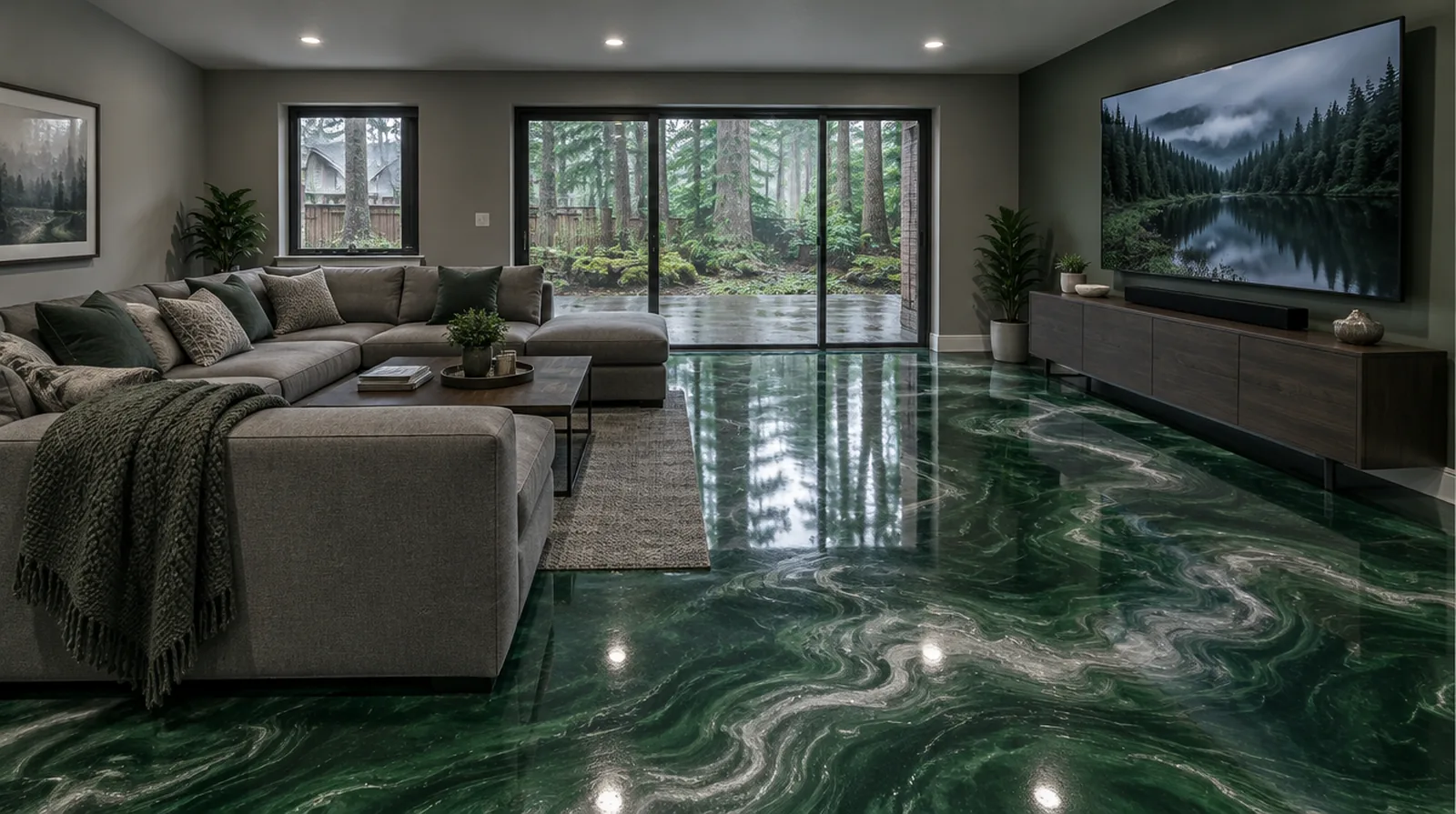
What makes metallic epoxy different
Metallic epoxy contains fine reflective pigments suspended in the resin. While the material is wet, we move it with rollers, trowels, sprayers and solvents so the pigments drift and settle into swirls, veins and pools. Light reflects off the pigment at different angles, creating a three-dimensional look. No two floors are alike, which is part of the appeal.
Where it shines
- Daylight basements and media rooms
- Home offices and art studios
- Showrooms and salons
- Tasting rooms and restaurants
- Statement garages for car enthusiasts
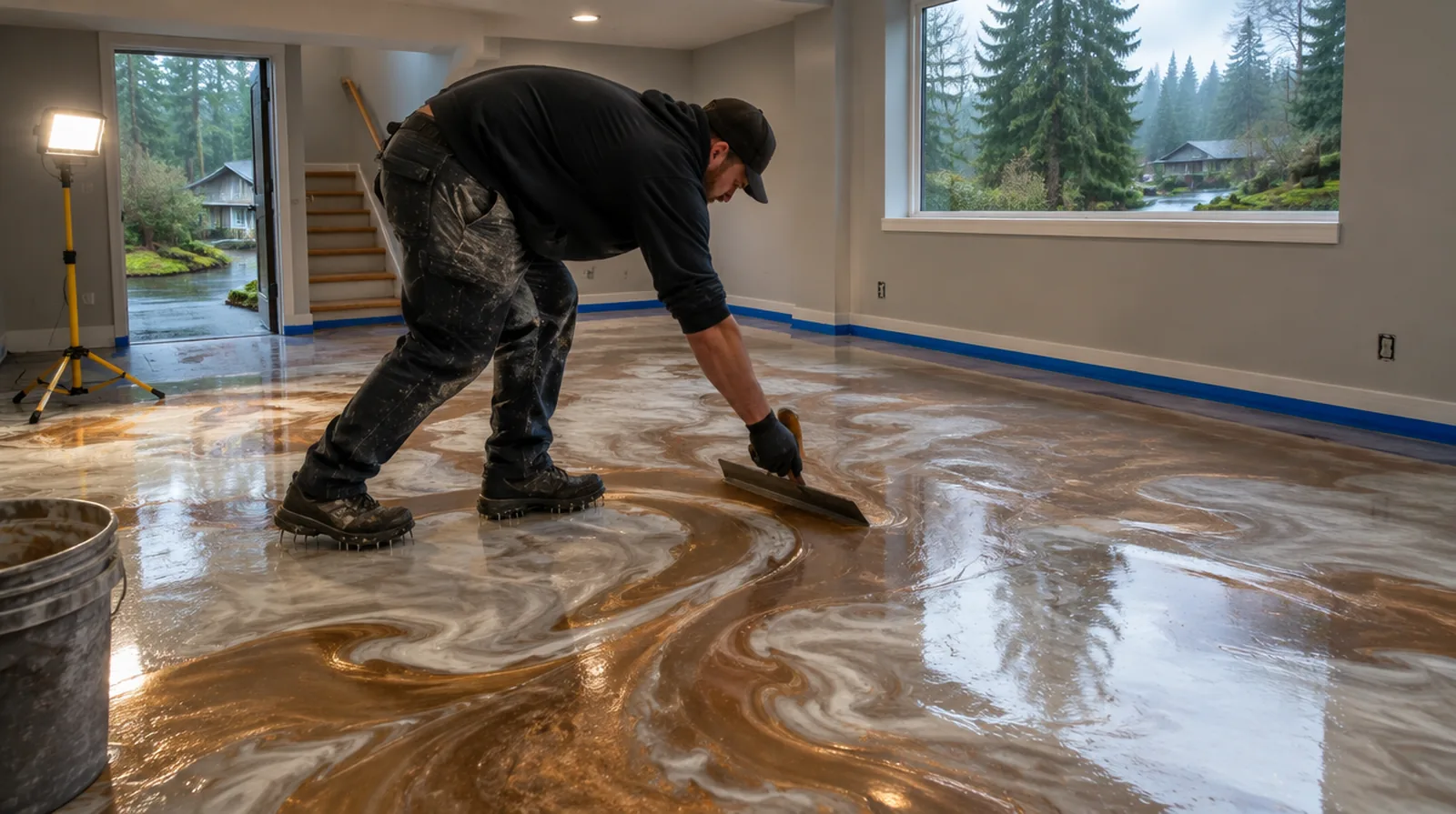
Basements and moisture
Many basements here are partially below grade on sloped lots, which means moisture can come up through the slab. Metallic floors are a high-gloss, high-visibility finish, so any blistering would show. We test moisture carefully and use a vapor-tolerant primer whenever readings call for it. That step protects the look of the floor for the long term.
Design process
We start with your space and style. Cool silvers and blues read modern. Greens and bronzes echo the woods outside. Charcoal and pearl look like marble. We show sample boards and photos from past work and talk through how bold or subtle you want the movement to be. On install day, the artistic work happens in one continuous pour, so planning ahead matters.
How we install it
- Moisture test and grind the slab.
- Repair cracks and level low spots.
- Apply primer and a tinted base coat.
- Pour and manipulate the metallic layer.
- Seal with a clear topcoat for wear and UV resistance.
Durability and comfort
A metallic floor is a full epoxy system, not just a decorative paint, so it resists stains, spills and everyday wear. Like any glossy floor, it can show scratches from dragging furniture, so use felt pads. Area rugs work well over it in living spaces and add warmth.
Slip resistance
High gloss can feel slick with socks or when wet. In areas that may get wet, such as near a bar or a basement door, we can add a fine anti-slip aggregate to the topcoat without hiding the look.
Timeline
Most metallic projects take two to three days including prep and cure. Light foot traffic is usually fine after a day, and furniture can return after a few days.
Cost factors
Metallic floors cost more than standard coatings because of the materials and the hand work involved. Size, slab condition, number of colors and topcoat choice all affect price. You receive a detailed written quote.
Keeping it looking new
Dust mop often to keep grit from dulling the finish. Clean with a pH-neutral cleaner and a microfiber mop. Avoid harsh chemicals and abrasive pads. If the gloss dulls after years of traffic, a fresh clear topcoat restores it.
Lighting and color
Metallic floors change with the light. Recessed lights create bright highlights, while daylight from a sliding door brings out depth. Before choosing colors, think about how the room is lit at night and on gray afternoons.
Pairing with the rest of the home
Metallic floors look best when they work with nearby finishes. We consider cabinet colors, trim, stair treads and wall paint so the floor feels intentional rather than out of place.
Can I pick exact patterns?
We can control colors and the general style, but the final pattern is always unique.
Is it good for a basement with moisture?
Often yes, with testing and a moisture-tolerant primer.
Does it work in a garage?
Yes, with a UV-stable topcoat. It is popular for showcase garages.
Design your floor
Contact us to talk through colors and see samples.
to plan a metallic epoxy floor.
Call (425) 696-7086 for a free estimate.