Why coatings fail
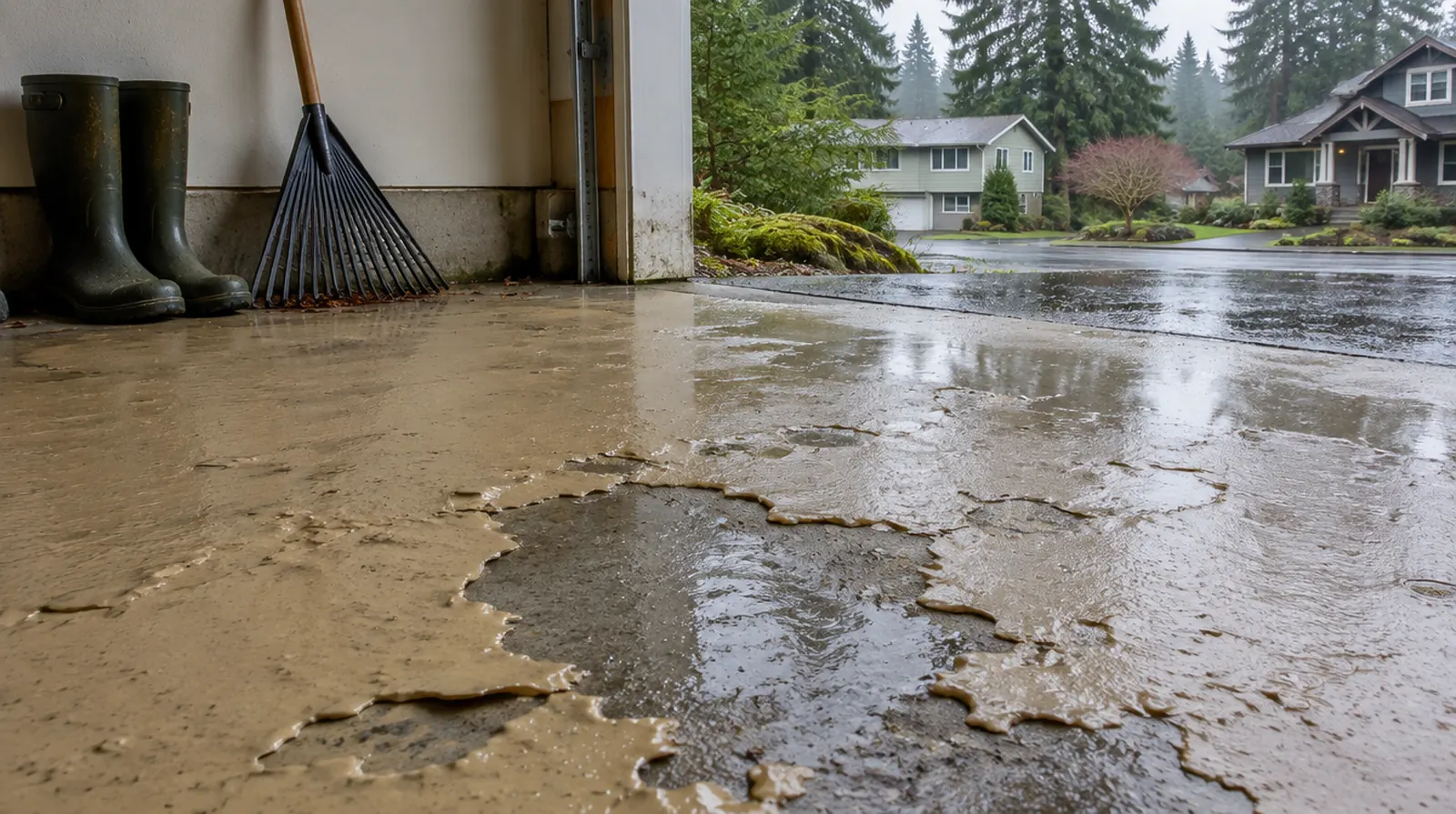
Most floor failures come down to a few causes:
- Poor prep. Coating rolled over etched, dirty or smooth concrete with little bond.
- Moisture vapor. Water pushing up from below creates blisters and lifts the coating.
- Hot tire pickup. Thin coatings soften and lift where tires sit.
- Wrong product. Water-based paints and thin kits are not built for heavy use.
- Contamination. Oil or old sealers under the coating prevent adhesion.
In this region, moisture is one of the most common culprits. Slabs on hillsides, near creeks or without good vapor barriers can push a surprising amount of water vapor through the concrete.
Diagnosis first
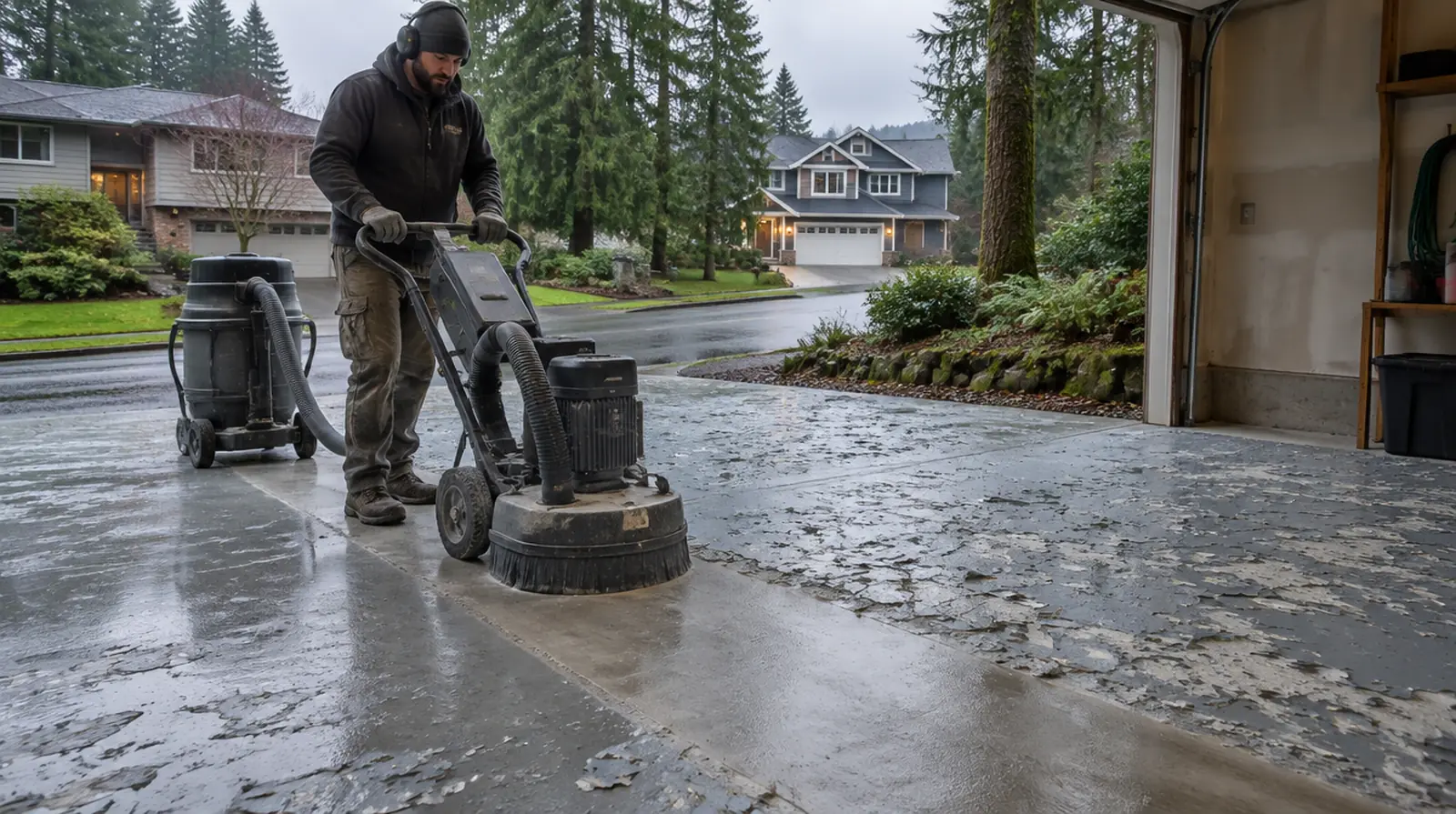
We look at where and how the floor failed. Blisters filled with liquid point to moisture. Peeling in tire paths points to hot tire pickup or poor bond. Flaking everywhere often means the coating never bonded. We test moisture levels and check for contamination. Understanding the cause is the only way to prevent a repeat.
Repair options
Spot repair. If a coating is generally sound with a few damaged areas, we can grind out and patch those spots and blend them in.
Full removal and recoat. If the coating is failing broadly, we grind it all off down to sound concrete and install a new system with the right primer for the conditions. This is the most common fix for failed DIY kits.
Fixing moisture problems
When testing shows high moisture vapor, we use a moisture-mitigating primer designed to tolerate it. We also look at outside drainage, gutters and grading and let you know if something should be addressed to reduce water reaching the slab.
Repairing the concrete itself
Failed coatings often leave damaged concrete. We fill cracks, rebuild spalled areas and level low spots so the new floor starts flat and solid.
What to expect
- Inspection and moisture testing.
- Written plan explaining the cause and the fix.
- Removal or spot repair.
- Concrete repairs.
- New coating system and cure.
Avoiding a repeat
The new floor is built around the problem we found, whether that is moisture, heat from tires or contamination. That is what makes the repair permanent instead of temporary.
Signs to call early
Small bubbles, soft spots under tires, white powder at edges or chips that keep spreading are all early warnings. Catching problems early can sometimes allow a spot repair instead of a full removal. If you see these signs, send us a photo and we will tell you what we think is going on.
Fixing a failed DIY kit
A large share of the floors we repair started as a weekend kit. These kits are thin and often go down over etched concrete with little bond. Within a year or two, hot tires pull up patches and the rest starts flaking. The fix is the same every time: grind it all off, repair the concrete and install a real system on a properly prepared surface. It is a common job for us, and the results are worth it.
Can you coat over my peeling floor?
No. Coating over a failing layer guarantees another failure. It must come off.
How long does removal take?
Usually a day for a typical garage, included in the overall schedule.
Will repairs match the rest?
Spot repairs blend well with flake floors. Solid colors can be harder to match exactly.
Get your floor fixed
Contact us with photos for a fast assessment.
to get a floor repair assessment.
Call (425) 696-7086 for a free estimate.